Protein S deficiency is a disorder associated with increased risk of venous thrombosis.[1] Protein S, a vitamin K-dependent physiological anticoagulant, acts as a nonenzymatic cofactor to activate protein C in the degradation of factor Va and factor VIIIa.[3]

Decreased (antigen) levels or impaired function of protein S leads to decreased degradation of factor Va and factor VIIIa and an increased propensity to venous thrombosis. Protein S circulates in human plasma in two forms: approximately 60 percent is bound to complement component C4b β-chain while the remaining 40 percent is free, only free protein S has activated protein C cofactor activity[medical citation needed]
Signs and symptoms
Among the possible presentation of protein S deficiency are:[1][2][4]
- Thrombosis of lower extremities
- Superficial thrombophlebitis
- Redness in affected area
- Purpura fulminans
Cause

In terms of the cause of protein S deficiency it can be in inherited via autosomal dominance. A mutation in the PROS1 gene triggers the condition. The cytogenetic location of the gene in question is chromosome 3, specifically 3q11.1[5][6] Protein S deficiency can also be acquired due to vitamin K deficiency, treatment with warfarin, liver disease, and acute thrombosis (antiphospholipid antibodies may also be a cause as well)[1]
Pathophysiology
In regards to the mechanism of protein S deficiency, Protein S is made in liver cells and the Endothelium.[7][8] Protein S is a cofactor of APC both work to degrade factor V and factor VIII. It has been suggested that Zn2+ might be necessary for Protein S binding to factor Xa.[2][9]
Mutations in this condition change amino acids, which in turn disrupts blood clotting. Functional protein S is lacking, which normally turns off clotting proteins, this increases risk of blood clots.[5]
Diagnosis
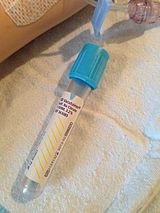
The diagnosis for deficiency of protein S can be done via reviewing family history of condition and genetic testing, as well as the following:[1][10][11]
- Protein S antigen test
- Coagulation test (prothrombin time test)
- Thrombotic disease investigation
- Factor V Leiden test
Differential diagnosis
Among the possibilities for differential diagnosis of protein S deficiency are- Antiphospholipid syndrome, disseminated intravascular coagulation and antithrombin deficiency (though this list is not exhaustive)[2]
Types
There are three types of hereditary protein S deficiency:[2][5]
- Type I – decreased protein S activity: decreased total protein S levels, as well as decreased free protein S levels
- Type II – decreased in regards to the cofactor activity of the protein
- Type III – decreased protein S activity: decreased free protein S levels (normal total protein S levels)
Treatment

In terms of treatment for protein S deficiency the following are consistent with the management (and administration of) individuals with this condition (the prognosis for inherited homozygotes is usually in line with a higher incidence of thrombosis for the affected individual[1]):[2][9]
- Unfractionated heparin (w/ warfarin)
- LMWH/Low molecular weight heparin
- Dabigatran
- Direct Factor Xa Inhibitors
- Graduated compressed stocking
- High degree of prophylaxis