Thickened earlobes-conductive deafness syndrome, also known as Escher-Hirt syndrome, or Schweitzer Kemink Graham syndrome,[1] is a rare genetic disorder which is characterized by ear and jaw abnormalities associated with progressive hearing loss.[2] Two families worldwide have been described with the disorder.[3]
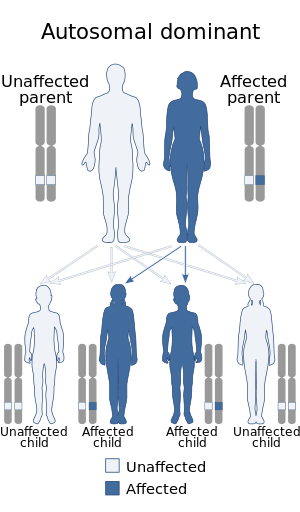
Presentation
People with the disorder often have the following symptoms:[4]
Ear/Auditory
- Microtia (abnormally small ears)
- Thick earlobes
- Conductive hearing loss
- Congenital auditory ossicle anomalies
Jaw
- Micrognathia
Etiology
Escher et al. described a family with dominantly inherited conductive deafness caused by ear anomalies in 1968[5] and Wilmot et al. described another family with the same symptoms and mode of inheritance in 1970,[6] Schweitzer et al described the symptoms and declared a novel syndrome in 1984.[7]